# Empower Your Environmental Projects with the Right Microcontroller: A DIY Guide to Choosing the Perfect One for Sensing Needs

Environmental monitoring has never been more accessible to DIY enthusiasts and citizen scientists. Microcontrollers serve as the brain of your sensing projects, collecting data about air quality, water conditions, and ecosystem health.
🌍 Why Microcontrollers Matter in Environmental Sensing
The rise of affordable microcontroller platforms has democratized environmental monitoring. Today, anyone passionate about sustainability can build sophisticated sensing systems to track pollution levels, monitor climate variables, or study wildlife patterns. These tiny computing devices process sensor data, store information, and communicate findings to other systems or the cloud.
Microcontrollers differ from full computers like Raspberry Pi in crucial ways. They consume less power, operate in harsh conditions, and excel at repetitive tasks. For environmental projects requiring long-term deployment in remote locations, these characteristics prove invaluable. Battery-powered weather stations, wildlife tracking devices, and water quality monitors all benefit from microcontroller efficiency.
The environmental sensing market continues expanding rapidly. Researchers, conservation groups, and concerned citizens deploy thousands of DIY monitoring stations worldwide. This grassroots movement generates valuable data about local conditions that official agencies might miss. Your microcontroller-based project could contribute to scientific understanding while empowering your community with actionable environmental information.
🔍 Understanding Your Environmental Sensing Requirements
Before selecting a microcontroller, clearly define your project objectives. Different environmental applications demand different capabilities. A soil moisture monitor for your garden has vastly different requirements than a comprehensive air quality station tracking multiple pollutants.
Identifying Critical Project Parameters
Power consumption ranks among the most critical factors for environmental projects. Will your device connect to mains electricity, or must it operate on batteries for weeks or months? Solar-powered stations require microcontrollers with sleep modes that reduce power draw to microamperes. Urban installations with reliable power can afford higher consumption rates.
Environmental conditions significantly impact hardware selection. Outdoor deployments expose electronics to temperature extremes, humidity, dust, and precipitation. Industrial-grade microcontrollers withstand broader temperature ranges than consumer versions. Some projects require waterproof enclosures and conformal coating on circuit boards to prevent moisture damage.
Data processing needs vary considerably. Simple temperature logging requires minimal computational power, while real-time analysis of particulate matter sensors demands more processing muscle. Consider whether your microcontroller handles calculations locally or transmits raw data to external systems for analysis.
Sensor Compatibility Considerations
Environmental sensors communicate through various protocols including I2C, SPI, UART, and analog signals. Your microcontroller must support the interfaces required by your chosen sensors. Most modern platforms offer multiple communication options, but verifying compatibility prevents frustrating surprises during development.
Analog-to-digital converter (ADC) resolution matters when working with analog sensors. A 10-bit ADC provides 1024 discrete values, while 12-bit resolution offers 4096 levels. Higher resolution enables more precise measurements, crucial for detecting subtle environmental changes. Some environmental sensors output 0-5V signals, while others use 0-3.3V ranges—ensure your microcontroller handles your sensor’s voltage levels.
⚡ Popular Microcontroller Platforms for Environmental Projects
Several microcontroller families dominate the environmental sensing landscape. Each offers distinct advantages for specific applications. Understanding their strengths helps you make informed decisions aligned with project requirements.
Arduino: The Gateway to Environmental Monitoring
Arduino boards introduced countless makers to microcontroller programming. Their approachable ecosystem, extensive documentation, and vast community support make Arduino ideal for beginners. The Arduino Uno remains popular for prototyping, while the Arduino Nano fits compact deployments.
For environmental projects, consider the Arduino MKR family specifically designed for IoT applications. The MKR WiFi 1010 includes wireless connectivity, while the MKR WAN 1310 supports LoRaWAN for long-range, low-power communication—perfect for distributed sensor networks. Arduino boards typically consume more power than alternatives, but their ease of use often justifies this tradeoff for educational projects or rapid prototyping.
The Arduino platform shines when working with numerous sensors simultaneously. Abundant shield boards and libraries simplify integration with environmental sensors. Temperature, humidity, gas, light, and particle sensors all have well-documented Arduino libraries reducing development time significantly.
ESP32 and ESP8266: WiFi-Enabled Environmental Intelligence
The ESP32 microcontroller revolutionized IoT projects by combining powerful processing with built-in WiFi and Bluetooth at remarkably low cost. Environmental monitoring stations benefit enormously from wireless connectivity, enabling real-time data transmission to web servers or cloud platforms.
ESP32 offers dual-core processing, allowing simultaneous sensor reading and data transmission without timing conflicts. Its deep sleep modes draw minimal current, extending battery life for solar-powered installations. The chip includes numerous GPIO pins supporting multiple sensors, plus hardware support for common communication protocols.
The older ESP8266 provides similar WiFi capabilities with less processing power and fewer pins. For simpler environmental projects monitoring temperature, humidity, or basic air quality, the ESP8266 offers excellent value. Both platforms integrate seamlessly with environmental data platforms like ThingSpeak, Adafruit IO, and custom MQTT servers.
STM32: Industrial-Grade Environmental Sensing
STMicroelectronics’ STM32 family brings industrial performance to DIY projects. These ARM Cortex-M microcontrollers offer exceptional processing power, extensive peripheral options, and robust operation across extreme temperature ranges. Professional environmental monitoring applications frequently choose STM32 platforms for their reliability.
The Blue Pill and Black Pill development boards make STM32 accessible to hobbyists. Programming requires slightly more expertise than Arduino, but the performance gains justify the learning curve for demanding applications. STM32 microcontrollers excel at managing multiple sensors with precise timing requirements, processing complex algorithms locally, and maintaining operation in harsh conditions.
Power efficiency rivals specialized low-power chips when properly configured. STM32 sleep modes reduce consumption to levels suitable for multi-year battery operation in weather stations or wildlife monitors.
Particle Photon and Boron: Cloud-Connected Environmental Monitoring
Particle devices target connected applications with cellular or WiFi connectivity built-in. The Particle Boron includes LTE cellular communication, eliminating WiFi dependency—crucial for remote environmental installations beyond wireless network coverage. Particle’s cloud platform simplifies over-the-air firmware updates, enabling remote maintenance of deployed sensors.
These platforms cost more than basic microcontrollers but reduce development complexity for cloud-connected projects. Particle’s ecosystem handles authentication, encryption, and communication protocols, letting you focus on environmental sensing rather than networking infrastructure.
📊 Matching Sensors to Microcontroller Capabilities
Environmental sensors range from simple temperature probes to sophisticated gas chromatography systems. Your microcontroller must provide adequate interfaces, processing power, and memory for your chosen sensors.
Temperature and Humidity Sensing
DHT22, BME280, and SHT31 sensors represent popular choices for climate monitoring. These digital sensors communicate via I2C or proprietary protocols, requiring minimal processing resources. Virtually any microcontroller handles temperature and humidity sensing, making this an excellent starting point for environmental projects.
High-precision applications might employ industrial RTD or thermocouple sensors requiring specialized signal conditioning. Some microcontrollers include dedicated analog front-ends for these sensor types, while others need external amplifiers and ADCs to achieve necessary precision.
Air Quality and Gas Detection
Particulate matter sensors like the PMS5003 or SDS011 measure PM2.5 and PM10 concentrations crucial for air quality assessment. These sensors output UART serial data, requiring microcontrollers with available serial ports and sufficient processing to handle continuous data streams.
Gas sensors detecting CO2, CO, NO2, O3, and volatile organic compounds add complexity. Electrochemical sensors produce analog voltages requiring high-resolution ADCs. Metal-oxide sensors need heating elements drawing significant current—your microcontroller must either supply this current or control external power circuits.
The ESP32 excels at air quality monitoring due to multiple UART ports, adequate ADC resolution, and processing power for calculating air quality indices from multiple sensor inputs. Projects incorporating five or more gas sensors benefit from STM32’s extensive GPIO and peripheral options.
Water Quality Monitoring
Water quality projects measure pH, dissolved oxygen, conductivity, turbidity, and chemical concentrations. These sensors often output analog signals requiring careful ADC selection. pH sensors produce millivolt-scale signals demanding high input impedance and low noise—characteristics varying significantly between microcontrollers.
Atlas Scientific offers digital versions of water quality sensors with UART or I2C interfaces, simplifying integration at higher cost. Arduino and ESP32 platforms work well with these sensors, while custom STM32 designs can achieve lower cost per deployment unit for large-scale monitoring networks.
🔋 Power Management for Long-Term Environmental Deployment
Environmental sensing stations often operate autonomously for extended periods. Effective power management determines whether your project runs for days or years on a single battery charge.
Understanding Power Consumption Patterns
Microcontrollers consume varying amounts of current depending on operational mode. Active processing might draw 20-100mA, while deep sleep modes reduce consumption below 10μA. Environmental projects typically spend most time sleeping, waking periodically to read sensors and transmit data.
Calculate average power consumption by considering duty cycles. A weather station waking every 10 minutes, spending 30 seconds active, then sleeping consumes predominantly sleep-mode current. This calculation determines required battery capacity and solar panel sizing for your installation.
Sensor power consumption often exceeds microcontroller draw. Some gas sensors continuously heat elements, consuming hundreds of milliamps. Strategic sensor selection and power gating—using transistors to completely disconnect sensors between readings—dramatically extends operational life.
Solar Power Integration
Solar panels combined with rechargeable batteries enable indefinite operation for outdoor environmental monitors. The ESP32 and Arduino MKR series include battery management features simplifying solar integration. Some projects use dedicated solar charging chips like the TP4056 or CN3065 to manage lithium batteries safely.
Size your solar panel for worst-case winter conditions at your installation latitude. A weather station consuming an average of 10mA requires approximately 240mAh daily. A 5V 100mA solar panel produces about 500mAh daily in moderate sunlight, providing adequate margin for cloudy days when paired with sufficient battery capacity.
📡 Connectivity Options for Environmental Data
Collecting environmental data means little without effective ways to access and analyze it. Connectivity determines how information flows from your sensors to visualization platforms, databases, or alert systems.
WiFi and Ethernet Connectivity
WiFi-enabled microcontrollers like ESP32 and Arduino MKR WiFi excel in environments with existing wireless networks. They push data to cloud services, local servers, or mobile applications with minimal additional hardware. WiFi consumes significant power during transmission, requiring consideration in battery-powered designs.
Ethernet connections offer reliability for stationary installations with wired infrastructure. Arduino Ethernet shields or STM32 with Ethernet PHYs create stable connections unaffected by wireless interference—valuable for industrial environmental monitoring in electrically noisy environments.
LoRaWAN for Wide-Area Environmental Networks
LoRaWAN technology enables long-range communication (up to several kilometers) while consuming minimal power. Environmental sensor networks across farms, forests, or watersheds benefit from LoRaWAN’s coverage without cellular data costs. Arduino MKR WAN, ESP32 LoRa boards, and dedicated LoRa modules integrate with various microcontrollers.
Setting up LoRaWAN requires gateway infrastructure to receive sensor transmissions and forward data to network servers. The Things Network provides free community LoRaWAN infrastructure in many cities, while private gateways serve remote installations.
Cellular Connectivity for Remote Monitoring
Cellular communication reaches locations beyond WiFi and LoRaWAN coverage. Particle Boron, Arduino MKR NB 1500, and various cellular shields enable environmental monitoring in wilderness areas, marine environments, or developing regions. Cellular modules consume more power than other options but provide reliable connectivity almost anywhere.
Consider data costs when deploying cellular sensors. Environmental projects typically transmit small data packets infrequently, making pay-per-byte plans economical. Some carriers offer IoT-specific plans with favorable pricing for low-bandwidth applications.
💻 Development Tools and Programming Considerations
Microcontroller selection affects your development experience. Some platforms offer gentle learning curves, while others demand deeper technical knowledge but reward you with greater capabilities.
Programming Environments
Arduino IDE provides the most beginner-friendly environment with simplified C++ syntax and abundant examples. PlatformIO offers advanced features like library management, multiple board support, and professional debugging tools while maintaining Arduino compatibility. STM32CubeIDE targets STM32 development with graphical peripheral configuration and professional debugging.
ESP32 development spans multiple environments including Arduino IDE, ESP-IDF (Espressif’s native framework), and MicroPython. Arduino compatibility eases initial learning, while ESP-IDF unlocks advanced features for experienced developers. MicroPython provides interactive development particularly appealing for rapid prototyping and educational applications.
Libraries and Community Support
Extensive sensor libraries accelerate environmental project development. Arduino’s massive library ecosystem covers virtually every sensor imaginable. ESP32 inherits most Arduino libraries while adding ESP-specific capabilities. STM32 development sometimes requires adapting libraries or writing custom sensor drivers, increasing development time but offering optimization opportunities.
Active community forums help troubleshoot issues and discover solutions. Arduino and ESP32 communities provide extensive documentation, example projects, and responsive support. STM32 forums cater to more experienced developers but offer professional-grade insights.
🛠️ Practical Tips for Environmental Project Success
Successful environmental monitoring projects combine appropriate hardware selection with practical deployment considerations. These tips help avoid common pitfalls and improve project outcomes.
Prototyping Before Deployment
Thoroughly test your system indoors before outdoor installation. Simulate environmental conditions, verify power consumption matches calculations, and ensure data transmission works reliably. Breadboard circuits work fine for testing but transition to soldered boards or PCBs for permanent installations—environmental vibrations and temperature cycles quickly loosen breadboard connections.
Validate sensor calibration against known references. Air quality sensors benefit from comparison with official monitoring stations. Water sensors need calibration with buffer solutions. Temperature sensors should match accurate thermometers across your expected range.
Weatherproofing and Enclosure Selection
Environmental sensors must contact the environment while electronics require protection from it. Waterproof enclosures rated IP65 or higher prevent moisture ingress while cable glands seal wire entry points. Position temperature and humidity sensors outside main enclosures or use radiation shields preventing solar heating from affecting readings.
Condensation inside enclosures damages electronics even in sealed cases due to temperature cycling. Desiccant packets absorb moisture, while ventilation holes with waterproof membranes allow pressure equalization without admitting water.
Data Logging and Reliability
Local data logging provides backup when connectivity fails. SD card modules add non-volatile storage to most microcontrollers, preserving measurements during network outages. Implement robust error handling in your code to recover gracefully from sensor failures, communication errors, or power glitches.
Watchdog timers automatically reset frozen microcontrollers, essential for unattended installations. Most platforms include hardware watchdog support requiring periodic software acknowledgment—if your code hangs, the watchdog triggers a reset restoring operation.
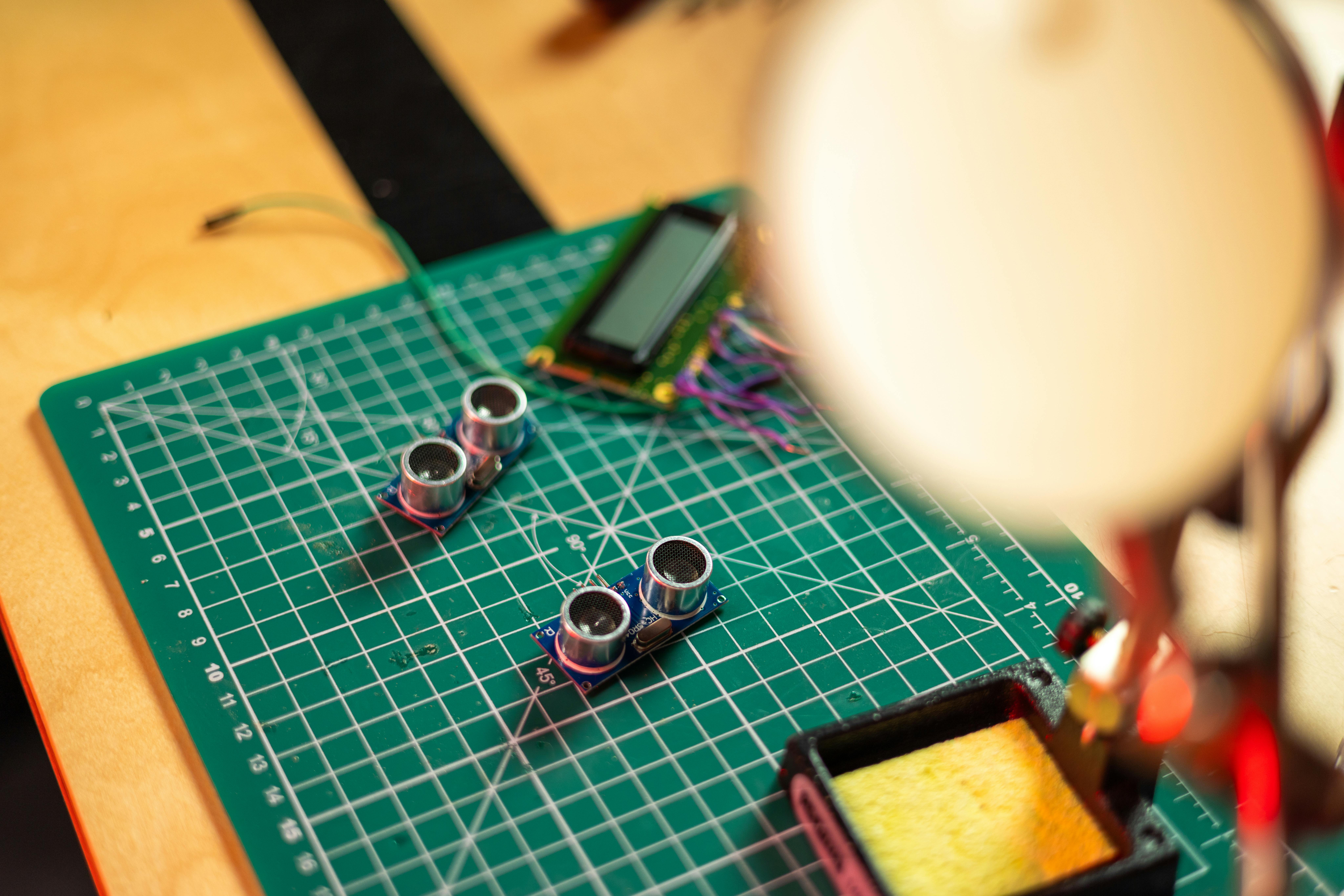
🌱 Starting Your Environmental Sensing Journey
Begin with a manageable project matching your skill level. A temperature and humidity logger using Arduino and DHT22 sensor teaches fundamental concepts without overwhelming complexity. As you gain experience, gradually incorporate additional sensors, wireless connectivity, and sophisticated data analysis.
Document your project thoroughly—future you will appreciate detailed notes when troubleshooting issues months later. Share your work with online communities; your experiences help others while community feedback improves your designs. Environmental monitoring benefits humanity when data is collected and shared widely.
Consider contributing your data to citizen science initiatives like PurpleAir for air quality, Weather Underground for meteorological data, or local watershed groups for water quality information. Your measurements add valuable geographic coverage complementing official monitoring networks while empowering your community with local environmental awareness. 🌍
The right microcontroller transforms your environmental vision into measurable reality. Whether tracking backyard biodiversity, monitoring urban air quality, or studying aquatic ecosystems, these powerful tools put scientific instrumentation in your hands. Start small, learn continuously, and watch your environmental projects grow from simple sensors to comprehensive monitoring systems making real differences in understanding and protecting our planet.