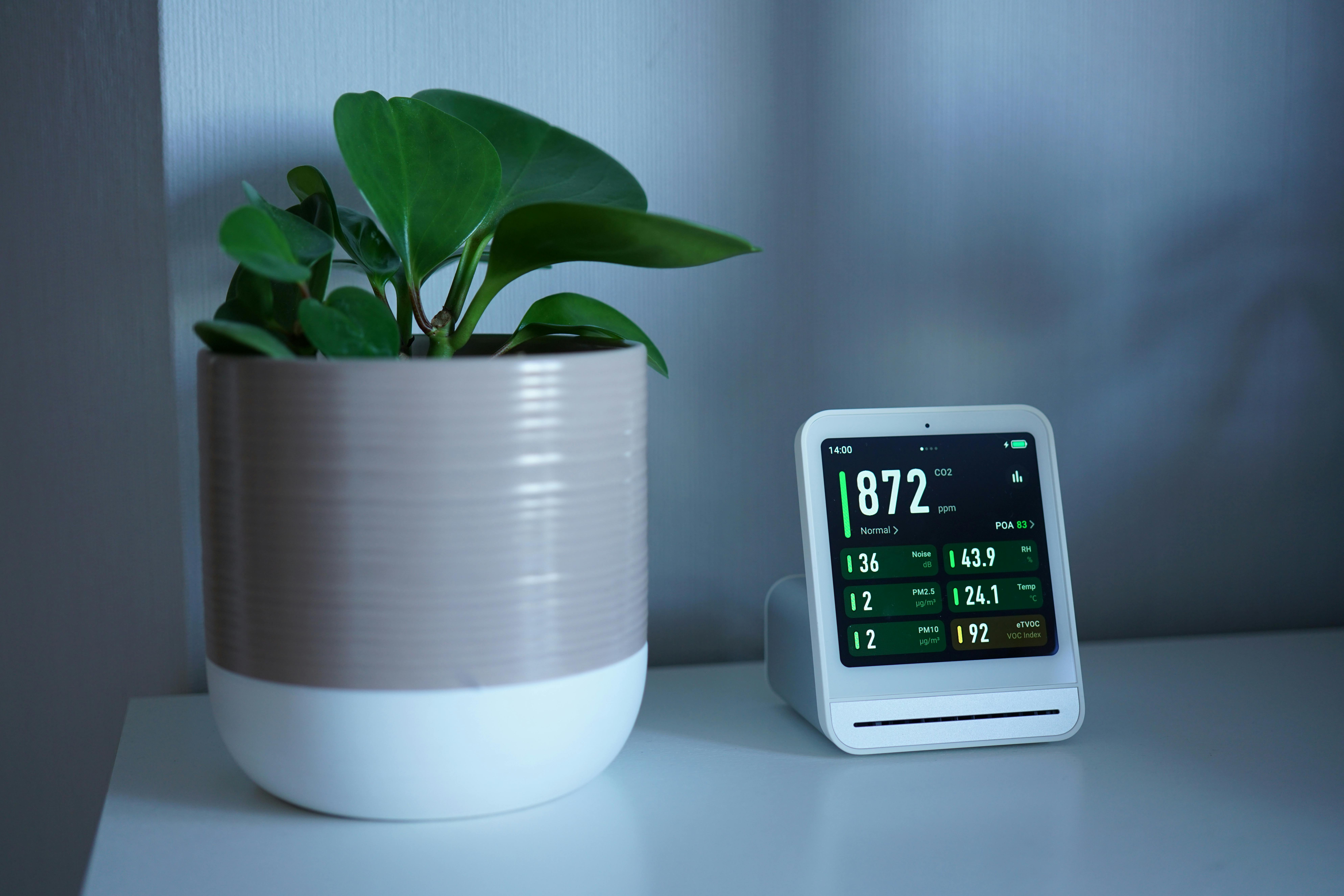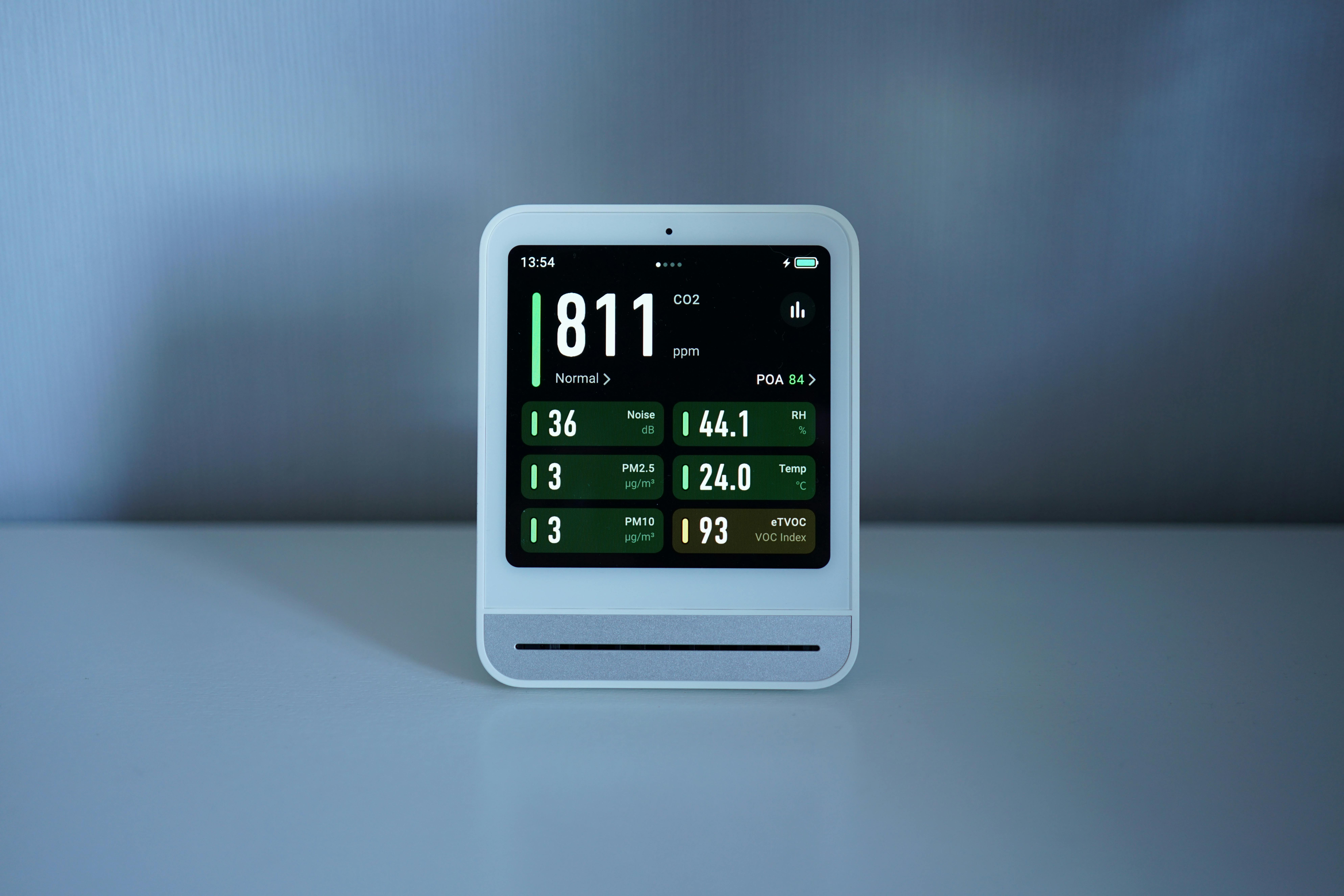
Cross-calibration transforms sensor accuracy by synchronizing multiple identical devices, eliminating systematic errors and ensuring consistent measurements across all instruments in your network.

🎯 Understanding the Foundation of Cross-Calibration
When deploying multiple sensors in research, industrial, or environmental monitoring applications, maintaining measurement consistency across all devices becomes paramount. Cross-calibration represents a sophisticated methodology that leverages the statistical power of identical sensors to achieve unprecedented accuracy levels that individual calibration simply cannot match.
The fundamental principle behind cross-calibration relies on the assumption that while individual sensors may exhibit unique drift patterns and systematic biases, the collective behavior of identical sensors exposed to the same conditions reveals the true measurement value. By comparing readings from multiple sensors simultaneously, researchers can identify and correct device-specific errors that would otherwise remain undetected.
This approach differs significantly from traditional calibration methods that rely on reference standards or laboratory conditions. Cross-calibration occurs in real-world environments, using the sensors’ own collective intelligence to establish a dynamic reference framework that adapts to changing conditions and evolving sensor characteristics over time.
Why Identical Sensors Drift Differently Over Time
Manufacturing processes, despite their precision, introduce microscopic variations in sensor components that manifest as unique performance characteristics. Two sensors rolling off the same production line on the same day will inevitably develop distinct measurement personalities as they age and respond to environmental stresses.
Temperature cycling causes differential expansion and contraction in sensor materials, gradually altering calibration parameters. Humidity exposure affects electronic components unevenly, depending on microscopic differences in protective coatings and seal integrity. Chemical exposure, even at trace levels, can degrade sensing elements at different rates based on subtle material composition variations.
Mechanical stress from installation, vibration, or handling creates unique structural changes in each sensor. These cumulative effects mean that sensors initially calibrated to identical specifications will gradually diverge in their measurement characteristics, with some drifting faster or in different directions than others.
The Statistical Advantage of Sensor Networks
Deploying multiple identical sensors creates a powerful statistical framework for error detection and correction. When ten sensors measure the same phenomenon, nine might cluster around one value while a tenth deviates significantly, immediately flagging potential calibration issues or sensor malfunction.
This redundancy provides continuous validation that single-sensor deployments lack entirely. Rather than waiting for periodic laboratory calibration checks, cross-calibration enables real-time quality assurance, catching problems before they compromise data integrity or operational decisions.
The statistical confidence increases with network size. Three sensors provide basic redundancy, five sensors enable robust outlier detection, and ten or more sensors support sophisticated multivariate analysis that can distinguish between genuine environmental variations and sensor-specific artifacts.
🔬 Implementing Effective Cross-Calibration Protocols
Successful cross-calibration begins with careful sensor selection and deployment planning. Sensors must be truly identical in specification, not just similar models with different firmware versions or manufacturing dates that span multiple production runs. Documentation of sensor serial numbers, manufacturing dates, and initial calibration certificates provides essential traceability.
Co-location periods form the cornerstone of cross-calibration methodology. During these intervals, all sensors in the network must experience identical conditions while recording measurements simultaneously. This requires careful attention to sensor placement, ensuring that microenvironmental variations don’t introduce artificial differences that could be misinterpreted as calibration errors.
Data collection during co-location must be synchronous and sufficiently frequent to capture temporal variations in the measured parameter. For temperature sensors, readings every minute might suffice, while air quality sensors monitoring rapidly changing pollutant concentrations may require second-by-second sampling to ensure statistical validity.
Mathematical Approaches to Cross-Calibration
The simplest cross-calibration method uses the ensemble mean as a reference. Each sensor’s deviation from the network average indicates its calibration offset, which can then be applied as a correction factor. This approach works well when all sensors have similar reliability and no single device can be assumed more accurate than others.
More sophisticated algorithms employ weighted averaging, assigning greater influence to sensors with historically lower noise levels or better long-term stability. Machine learning techniques can identify complex non-linear drift patterns that simple offset corrections cannot address, building predictive models that anticipate future calibration needs based on environmental history and sensor age.
Regression analysis reveals systematic relationships between sensor readings, enabling transfer functions that map one sensor’s output to the corrected values of another. These transfer functions can be periodically updated as sensors continue aging, maintaining calibration accuracy throughout the sensor lifecycle.
Real-World Applications Across Industries
Environmental monitoring networks spanning large geographical areas rely heavily on cross-calibration to maintain data consistency. Weather station networks measuring temperature, humidity, and precipitation use these techniques to detect failing sensors and correct drift before data quality suffers. This ensures that climate records remain internally consistent even as individual sensors are replaced over decades.
Industrial process control systems deploy redundant sensors for safety-critical measurements like temperature, pressure, and flow rates. Cross-calibration identifies sensors requiring maintenance before their drift compromises process quality or creates hazardous conditions. The continuous validation provides confidence that alarm thresholds will trigger reliably when genuine problems arise.
Research applications benefit enormously from cross-calibration’s ability to extend time between expensive laboratory calibrations. Field studies monitoring ecosystem parameters, urban air quality, or agricultural conditions can maintain measurement accuracy for months or years using cross-calibration, dramatically reducing project costs and logistical complexity.
📊 Quantifying Accuracy Improvements
Studies comparing cross-calibrated sensor networks against individually calibrated devices consistently demonstrate measurement uncertainty reductions of 30-70%. The exact improvement depends on sensor type, deployment conditions, and network size, but the benefits are substantial across virtually all applications.
Long-term stability improvements are equally impressive. Sensors typically require laboratory recalibration every 6-12 months to maintain specifications, but cross-calibrated networks can extend these intervals to 18-36 months while actually improving overall accuracy. This translates directly to reduced operational costs and increased data continuity.
Detection limits improve when cross-calibration reduces systematic errors. Sensors measuring trace concentrations of pollutants or subtle environmental changes can reliably detect smaller signals when calibration uncertainties are minimized through network-based corrections.
Overcoming Common Implementation Challenges
Establishing truly identical measurement conditions during co-location periods presents practical difficulties, especially for sensors measuring spatially variable parameters. Air quality sensors separated by mere centimeters can experience different pollutant concentrations due to microenvironmental effects. Temperature sensors at different heights in a calibration chamber encounter thermal gradients that complicate comparison.
Solution strategies include rotating sensor positions during co-location, time-averaging over sufficiently long periods that short-term spatial variations cancel out, and using controlled environments like calibration chambers where conditions can be precisely homogenized. Each approach has trade-offs between practical feasibility and statistical rigor that must be evaluated for specific applications.
Data synchronization across distributed sensor networks requires careful attention to timing accuracy. Clock drift in data loggers can introduce apparent differences in sensor readings that are actually timing artifacts. Network time protocol synchronization, GPS timestamping, or centralized data acquisition systems solve this problem at the cost of increased system complexity.
Handling Sensor Failures and Outliers
Cross-calibration networks must distinguish between sensors requiring calibration adjustment and those experiencing genuine failures. Statistical outlier detection algorithms identify readings that deviate significantly from network consensus, but determining whether to correct or exclude those readings requires careful analysis.
Persistent outliers indicating sensor malfunction should be flagged for maintenance and potentially removed from calibration calculations. Temporary deviations caused by localized environmental effects or data transmission errors should be filtered without discarding otherwise healthy sensors. Automated systems can make these distinctions using trend analysis and contextual environmental data.
Network resilience depends on maintaining sufficient redundancy even when some sensors fail. A ten-sensor network can tolerate two or three failures while still providing robust cross-calibration, but smaller networks lose this capability quickly as sensors drop out. Deployment planning must account for expected failure rates and ensure adequate redundancy margins.
🚀 Advanced Techniques for Maximum Precision
Multivariate cross-calibration exploits correlations between multiple measured parameters to enhance accuracy beyond what single-parameter approaches achieve. Temperature and humidity sensors often drift in correlated ways due to shared environmental stresses. By analyzing both parameters simultaneously, cross-calibration algorithms can better distinguish true drift from environmental variations.
Dynamic calibration models that adapt to changing conditions represent the cutting edge of cross-calibration technology. Rather than applying static correction factors, these systems continuously update calibration parameters based on recent sensor behavior and environmental history. Machine learning algorithms trained on historical data can predict drift patterns and preemptively adjust corrections before accuracy degrades.
Hybrid approaches combining cross-calibration with periodic laboratory reference checks provide the ultimate accuracy assurance. The network maintains daily accuracy through cross-calibration while occasional laboratory visits anchor the entire network to absolute standards, preventing collective drift where all sensors gradually shift together in ways that internal cross-calibration cannot detect.
Cost-Benefit Analysis for Sensor Networks
Initial investment in cross-calibration infrastructure includes additional sensors for redundancy, data management systems for synchronized collection and analysis, and software implementing calibration algorithms. For small deployments, these costs may equal or exceed traditional calibration approaches, but economies of scale favor cross-calibration as network size increases.
Operational savings accumulate rapidly through reduced calibration frequency, eliminated shipping and downtime for laboratory visits, and decreased sensor replacement rates from early failure detection. A ten-sensor network requiring annual laboratory calibration at $200 per sensor spends $2,000 yearly on calibration alone, while cross-calibration can halve this frequency while improving accuracy.
Data quality improvements deliver less tangible but often more valuable benefits. Research projects avoid data gaps from sensor failures, regulatory compliance monitoring reduces false alarms and violations, and industrial processes minimize quality excursions from measurement errors. These benefits frequently dwarf direct cost savings.
Building Future-Proof Monitoring Systems
Sensor technology evolves rapidly, with new models offering improved specifications, reduced costs, or enhanced features. Cross-calibration networks must accommodate sensor replacement and technology migration while maintaining data continuity and accuracy standards.
Careful documentation of calibration procedures, correction factors, and sensor histories enables smooth transitions as network composition changes. New sensors can be integrated through co-location periods with established network members, inheriting calibration from the existing ensemble before replacing older units.
Standardized data formats and open-source calibration software promote long-term sustainability by avoiding vendor lock-in and enabling community-driven improvements. Many research institutions and government agencies now share cross-calibration tools and methodologies, creating ecosystems that benefit all participants.
🎓 Training Teams for Successful Implementation
Technical staff responsible for sensor networks require training in both theoretical principles and practical implementation of cross-calibration. Understanding statistical concepts like confidence intervals, correlation analysis, and outlier detection enables informed decision-making when calibration results appear ambiguous or unexpected.
Practical skills include sensor installation techniques that minimize microenvironmental variations, data management procedures ensuring synchronization and quality control, and troubleshooting approaches for identifying and resolving calibration anomalies. Hands-on workshops using actual sensor hardware provide invaluable experience before deploying production systems.
Cross-disciplinary collaboration enhances cross-calibration success. Statisticians contribute analytical expertise, domain experts provide contextual knowledge about measured parameters, and field technicians offer practical insights about deployment realities. Regular communication among these groups prevents misunderstandings and ensures calibration procedures remain practical and scientifically sound.

The Path Forward for Sensor Accuracy
Cross-calibration represents a paradigm shift from viewing sensors as independent measurement devices to understanding them as components in intelligent networks where collective behavior reveals truth more reliably than individual readings. This conceptual framework will increasingly dominate sensor applications as Internet of Things deployments proliferate and data quality expectations rise.
Emerging technologies like edge computing and artificial intelligence will embed sophisticated cross-calibration algorithms directly into sensor networks, enabling real-time corrections without cloud connectivity or human intervention. Self-calibrating sensor networks that autonomously maintain accuracy throughout multi-year deployments will transition from research curiosities to standard products.
The fundamental power of cross-calibration—leveraging redundancy to achieve accuracy impossible for individual devices—ensures this approach will remain relevant regardless of future sensor technology advances. Whether applied to today’s electronic sensors or tomorrow’s quantum measurement devices, the statistical principles underlying cross-calibration provide a timeless framework for maximizing measurement accuracy through intelligent collaboration among identical instruments. ✨