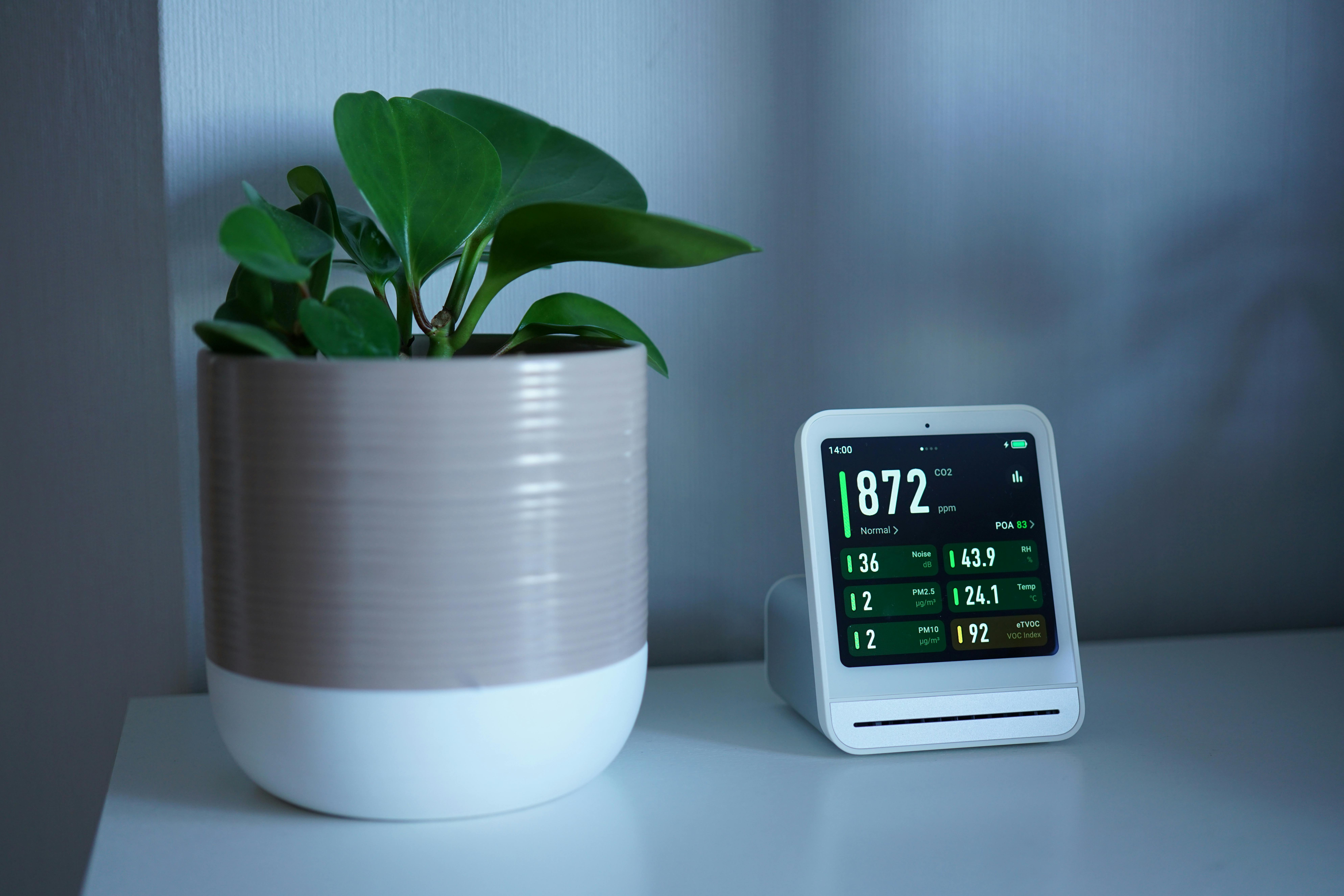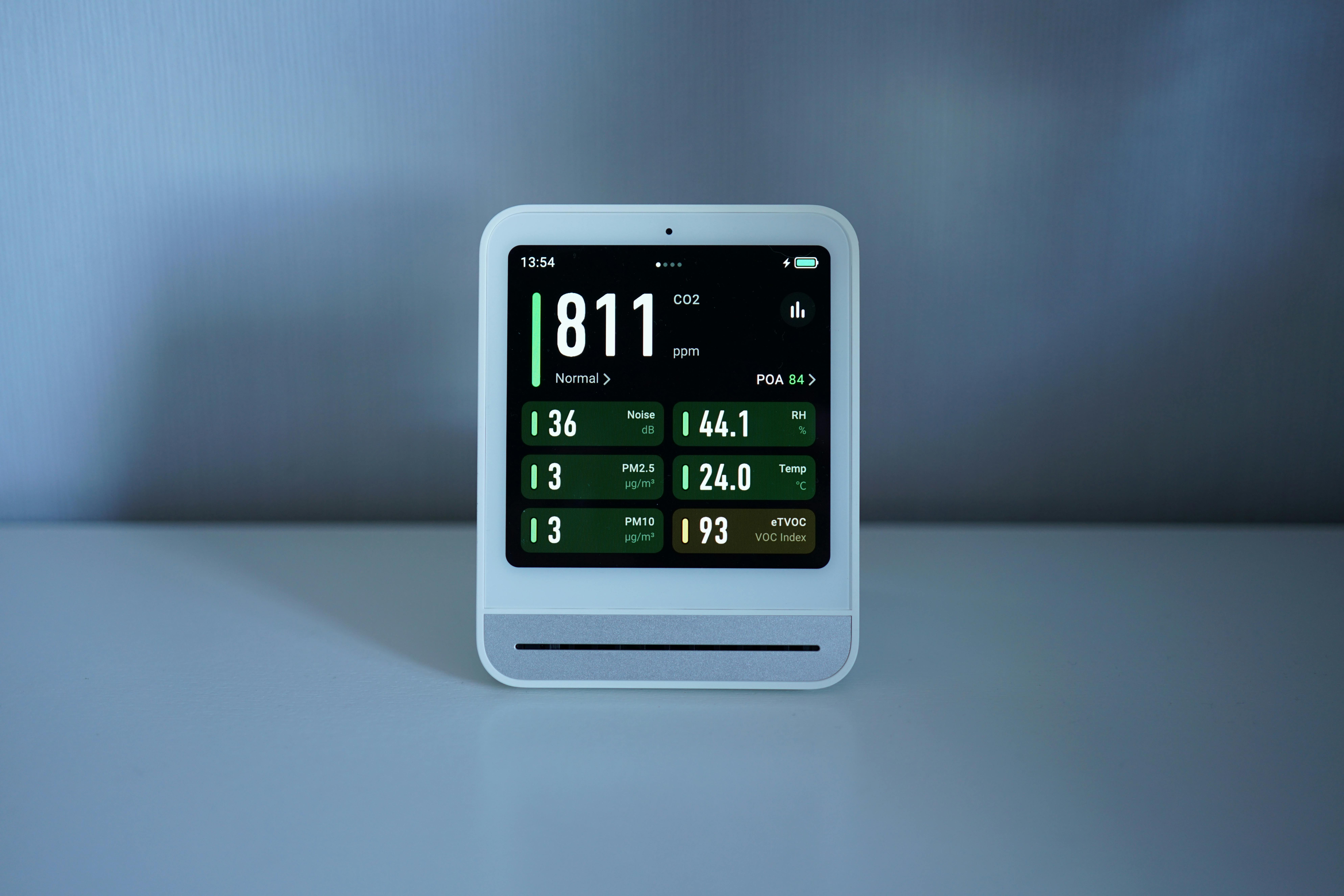
Selecting the right air-quality sensor for low-power devices requires balancing accuracy, energy efficiency, and cost-effectiveness in modern IoT applications.

🌍 Why Air Quality Monitoring Matters in Low-Power Applications
Air quality monitoring has become increasingly critical as urbanization and industrialization continue to impact our environment. From smart homes to wearable devices, the demand for efficient air-quality sensors that can operate on minimal power has skyrocketed. These sensors play a vital role in protecting human health by detecting harmful pollutants, volatile organic compounds (VOCs), particulate matter, and carbon dioxide levels.
Low-power devices present unique challenges for air-quality monitoring. Battery-operated sensors need to maintain accuracy while consuming minimal energy to extend operational lifespan. Whether deployed in smart buildings, environmental monitoring stations, or portable personal air-quality monitors, selecting the appropriate sensor module can make the difference between a successful implementation and a failed project.
The integration of air-quality modules into IoT ecosystems has transformed how we interact with our environment. These compact sensors enable real-time monitoring, data logging, and automated responses to air quality changes. Understanding the technical specifications, power requirements, and measurement capabilities of different sensor technologies is essential for engineers and developers working on next-generation environmental monitoring solutions.
🔬 Understanding Core Air Quality Parameters
Before diving into specific sensor modules, it’s important to understand what air quality parameters matter most for your application. Different sensors measure different pollutants and environmental factors, each with varying power consumption profiles.
Particulate Matter Sensing
Particulate matter (PM) includes microscopic particles suspended in air that can penetrate deep into lungs and bloodstream. PM2.5 and PM10 are the most commonly monitored sizes, referring to particles with diameters of 2.5 micrometers and 10 micrometers respectively. Laser-based particle counters offer high accuracy but consume more power than resistive or capacitive sensors.
Optical particle sensors work by passing air through a laser beam and measuring scattered light. While highly accurate, these sensors typically require continuous operation of a fan and laser diode, making power optimization crucial. Newer designs incorporate sleep modes and intermittent sampling to reduce average power consumption while maintaining measurement reliability.
Gas Sensing Technologies
Gas sensors detect specific airborne chemicals including carbon dioxide (CO2), carbon monoxide (CO), nitrogen dioxide (NO2), ozone (O3), and various volatile organic compounds. Different sensing technologies offer distinct advantages for low-power applications.
Electrochemical sensors provide excellent specificity and sensitivity for target gases but may require periodic recalibration. Metal-oxide semiconductor (MOS) sensors offer broader detection capabilities and lower cost but typically consume more power due to heating requirements. Non-dispersive infrared (NDIR) sensors deliver exceptional CO2 measurement accuracy with moderate power consumption.
⚡ Power Consumption Considerations for Battery-Operated Devices
Power efficiency stands as the paramount concern when selecting air-quality modules for battery-operated applications. Understanding the complete power profile—including active measurement, standby, and sleep modes—determines real-world battery life and deployment feasibility.
Dynamic Power Management Strategies
Modern air-quality sensors incorporate sophisticated power management features that drastically reduce average consumption. Duty cycling allows sensors to wake periodically, take measurements, and return to deep sleep modes. A sensor consuming 50mA during active measurement but only 10μA in sleep mode can achieve months of operation on a single battery when properly configured.
Smart algorithms can optimize measurement intervals based on detected changes in air quality. When pollution levels remain stable, the device can extend intervals between measurements. Sudden changes trigger more frequent sampling, balancing responsiveness with power conservation.
Communication Protocol Impact
The interface protocol between sensor and microcontroller significantly affects overall power consumption. I2C and UART interfaces typically consume less power than SPI for low-data-rate applications. Sensors with built-in intelligence that process data locally reduce the computational burden on the host processor, further minimizing system-wide power draw.
Wireless transmission often represents the largest power drain in remote monitoring applications. Selecting sensors with local data processing, threshold detection, and event-triggered communication reduces unnecessary wireless transmissions, extending battery life substantially.
🏆 Top Air Quality Sensor Modules for Low-Power Designs
The market offers numerous air-quality sensor modules optimized for different applications and power budgets. Here’s a comprehensive look at leading options that balance performance with energy efficiency.
BME680 Environmental Sensor
The Bosch BME680 stands out as a versatile multi-sensor module measuring temperature, humidity, pressure, and gas resistance. Its ultra-low power consumption—as low as 3.7μA in sleep mode and 12mA during gas measurements—makes it ideal for battery-powered wearables and smart home devices. The integrated gas sensor detects VOCs with remarkable sensitivity, though it requires initial burn-in and periodic calibration for optimal accuracy.
This sensor’s small footprint (3mm x 3mm x 0.93mm) allows integration into space-constrained designs. The I2C and SPI interfaces provide flexible connectivity options, while the built-in digital signal processing reduces host processor requirements. However, users should note that the gas sensor requires heating, which accounts for most power consumption during active measurement.
CCS811 Digital Gas Sensor
The AMS CCS811 specializes in detecting equivalent CO2 (eCO2) and total volatile organic compounds (TVOC) with impressive power efficiency. Operating at just 1.2μA in sleep mode and 26mA during measurement mode, this sensor suits applications requiring intermittent air quality checks. The on-chip microcontroller handles complex calculations, delivering calibrated readings directly to the host system.
The CCS811’s intelligent firmware includes baseline correction algorithms that adapt to long-term environmental changes. This self-calibration capability reduces maintenance requirements in deployed systems. The sensor responds quickly to VOC changes, making it excellent for indoor air quality applications where cooking, cleaning, or other activities cause sudden pollution spikes.
PMS5003 Particulate Matter Sensor
For dedicated particulate matter monitoring, the Plantower PMS5003 offers laboratory-grade accuracy in a compact module. Using laser scattering technology, it simultaneously measures PM1.0, PM2.5, and PM10 concentrations. While its active power consumption (100mA typical) exceeds purely electrochemical sensors, sophisticated sleep modes reduce standby current to under 200μA.
The PMS5003 includes an integrated fan for active air sampling, ensuring representative measurements. The digital UART output simplifies integration, providing particle counts and mass concentration data in standard units. This sensor excels in outdoor environmental monitoring stations and air purifier feedback systems where particulate matter represents the primary concern.
SCD40 True CO2 Sensor
Sensirion’s SCD40 brings NDIR CO2 sensing to low-power applications with remarkable efficiency. Consuming just 15mA during measurement and less than 1mA in standby, it enables continuous CO2 monitoring in battery-powered devices. Unlike eCO2 estimation algorithms, NDIR technology directly measures CO2 concentration with minimal drift over time.
The SCD40’s small form factor (10mm x 10mm) and straightforward I2C interface facilitate rapid prototyping. Built-in temperature and humidity sensors enable automatic pressure compensation, enhancing accuracy across varying environmental conditions. The sensor’s 5-year operational lifetime without recalibration makes it ideal for building automation and HVAC optimization systems.
🔧 Integration Best Practices for Maximum Efficiency
Selecting appropriate sensors represents only half the battle—proper integration determines whether your design achieves its power efficiency goals. These practices help extract maximum performance from air-quality modules.
Optimized Sampling Strategies
Continuously running air-quality sensors drains batteries rapidly. Implementing intelligent sampling schedules based on application requirements can reduce power consumption by 90% or more. For indoor air quality monitoring, measurements every 5-10 minutes typically suffice when conditions remain stable. Outdoor environmental stations might sample hourly during nighttime when pollution levels change slowly.
Adaptive sampling algorithms monitor rate-of-change in sensor readings. When values remain within defined thresholds, the system extends intervals between measurements. Sudden changes trigger burst sampling to capture pollution events accurately. This approach maintains data quality while minimizing unnecessary sensor activation.
Hardware Design Considerations
Proper circuit design significantly impacts sensor performance and power consumption. Dedicated voltage regulators with ultra-low quiescent current prevent parasitic drain during sleep modes. Careful PCB layout minimizes electromagnetic interference that can introduce noise into sensitive analog sensor outputs.
Many air-quality sensors require specific airflow patterns for accurate measurements. Designing enclosures with appropriate ventilation ensures representative sampling without forced air circulation that increases power consumption. Strategic placement of inlet and outlet vents enables natural convection while protecting sensors from environmental contaminants.
Software Optimization Techniques
Firmware plays a crucial role in power management. Configuring microcontroller peripherals to power down during sensor measurements prevents unnecessary consumption. Using interrupt-driven architectures instead of polling reduces processor active time. DMA transfers allow sensor data collection without continuous CPU intervention.
Local data processing and filtering reduce wireless transmission requirements. Transmitting only significant changes or aggregated statistics rather than raw readings can decrease communication events by an order of magnitude. Implementing lossy compression for time-series data further reduces bandwidth and energy consumption.
📊 Comparing Performance Metrics Across Sensor Categories
Different applications prioritize different sensor characteristics. This comparison helps identify which modules align best with specific project requirements.
| Sensor Module | Key Parameters | Active Current | Sleep Current | Response Time | Best Application |
|---|---|---|---|---|---|
| BME680 | VOC, T, H, P | 12mA | 3.7μA | ~1 minute | Wearables, Smart Home |
| CCS811 | eCO2, TVOC | 26mA | 1.2μA | 10-60 seconds | Indoor Air Quality |
| PMS5003 | PM1.0, PM2.5, PM10 | 100mA | 200μA | 10 seconds | Outdoor Monitoring |
| SCD40 | CO2, T, H | 15mA | 0.4mA | 60 seconds | Building Automation |
🚀 Real-World Application Scenarios
Understanding how different sensors perform in actual deployments helps inform selection decisions. These scenarios illustrate practical considerations beyond datasheets.
Portable Personal Air Quality Monitor
Battery-powered personal monitors require ultra-compact sensors with minimal power consumption. A combination of the BME680 for general air quality and VOC detection with a small particulate sensor provides comprehensive monitoring. Duty cycling these sensors to measure every 5 minutes enables multi-day operation on a small lithium-ion battery while alerting users to pollution exposure.
The device can connect to smartphones via Bluetooth Low Energy, transferring accumulated data periodically rather than continuously streaming. Local processing identifies exposure events worth logging, reducing storage and transmission requirements. Users receive notifications when air quality drops below healthy thresholds, empowering informed decisions about outdoor activities.
Smart Building Ventilation Control
Commercial buildings optimize HVAC operation based on real-time air quality data from distributed sensor networks. The SCD40 provides accurate CO2 monitoring indicating occupancy and ventilation requirements. Supplementing with CCS811 sensors detects VOC spikes from cleaning activities or equipment operation that warrant increased air exchange.
These sensors typically connect to mains power but benefit from low-power designs that reduce cabling requirements and enable wireless nodes in retrofit installations. Energy-efficient sensors allow solar-powered operation with battery backup, eliminating wiring costs in large facilities. The system adjusts ventilation rates dynamically, reducing energy consumption compared to time-based schedules while maintaining superior air quality.
Agricultural Environment Monitoring
Greenhouse and livestock operations monitor air quality to optimize growing conditions and animal health. Remote locations often lack reliable power, making solar-harvesting systems with battery storage essential. Ultra-low-power sensors like the BME680 combined with particulate sensors monitor dust, humidity, and volatile compounds that indicate plant stress or disease.
These deployments require months of autonomous operation between maintenance visits. Aggressive power management extends battery life through winter months with limited solar charging. LoRaWAN or cellular connectivity transmits data to central monitoring systems, with sensors configured to report only when readings exceed normal ranges.
💡 Future Trends in Low-Power Air Quality Sensing
Emerging technologies promise even more efficient and capable air-quality sensors for next-generation applications. Understanding these developments helps future-proof designs and anticipate market shifts.
MEMS-Based Sensor Integration
Micro-electromechanical systems (MEMS) technology enables unprecedented miniaturization and power reduction. Next-generation gas sensors fabricated using MEMS processes require minimal heating power due to reduced thermal mass. Integration of multiple sensing elements on single silicon dies creates complete environmental monitoring systems in packages smaller than current single-parameter sensors.
These advances enable air-quality monitoring in previously impractical applications like disposable environmental badges or implantable medical sensors. The reduced manufacturing costs of MEMS production make comprehensive air quality sensing economically viable for mass-market consumer products.
AI-Enhanced Sensor Fusion
Machine learning algorithms running on ultra-low-power microcontrollers extract maximum information from minimal sensor data. Sensor fusion combines readings from multiple inexpensive sensors to achieve accuracy approaching expensive laboratory instruments. Neural network models trained on extensive environmental datasets identify specific pollution sources and predict air quality trends.
Edge AI processing eliminates cloud dependency, reducing latency and communication power consumption. On-device learning allows sensors to adapt to specific deployment environments, improving accuracy over time without manual recalibration. These intelligent sensors become proactive environmental guardians rather than passive measurement devices.
🎯 Making the Right Choice for Your Project
Selecting optimal air-quality modules requires carefully balancing multiple factors specific to your application. Consider these key questions when evaluating options for low-power devices.
First, identify which air quality parameters matter most for your use case. Indoor air quality applications prioritize CO2 and VOCs, while outdoor environmental monitoring emphasizes particulate matter and ozone. Measuring unnecessary parameters wastes power and increases cost without adding value.
Second, realistically assess power budget constraints. Calculate total energy available from your power source and required operational lifetime. Work backward to determine maximum average sensor power consumption. Remember that wireless communication, data logging, and other system functions also consume power beyond sensors themselves.
Third, evaluate integration complexity and development resources. Sensors with built-in calibration and data processing reduce firmware development time but may cost more per unit. Simple analog sensors offer lower component costs but require more sophisticated signal processing and calibration infrastructure.
Fourth, consider long-term operational requirements including calibration, maintenance, and sensor drift. Some technologies require frequent recalibration while others maintain accuracy for years. Factor these operational costs into total cost of ownership rather than focusing solely on initial component pricing.

🌟 Breathing Easier with Informed Sensor Selection
The proliferation of low-power air-quality sensors democratizes environmental monitoring, enabling applications from personal health tracking to planetary-scale pollution networks. Selecting appropriate modules requires understanding the tradeoffs between accuracy, power consumption, cost, and integration complexity specific to each project.
The sensors highlighted in this article represent proven solutions across diverse applications. The BME680 excels in space and power-constrained wearables. The CCS811 provides cost-effective indoor air quality monitoring. The PMS5003 delivers laboratory-grade particulate measurements for environmental stations. The SCD40 brings true CO2 sensing to battery-powered building automation.
Beyond individual sensor selection, system-level optimization through intelligent sampling, efficient communication protocols, and sophisticated power management separates successful deployments from battery-draining failures. Emerging technologies promise even more capable sensors with lower power consumption, expanding possibilities for ubiquitous environmental monitoring.
As air quality increasingly impacts public health discussions and regulatory frameworks, demand for efficient monitoring solutions will only grow. Engineers and developers who master low-power sensor integration position themselves at the forefront of this vital field, creating devices that literally help people breathe easier while advancing our understanding of environmental challenges.
The journey to selecting optimal air-quality modules begins with clearly defined requirements and thorough understanding of available technologies. Armed with knowledge of sensor capabilities, power optimization techniques, and real-world deployment considerations, you’re equipped to make informed decisions that balance performance with efficiency in your next low-power environmental monitoring project.